

Farasha




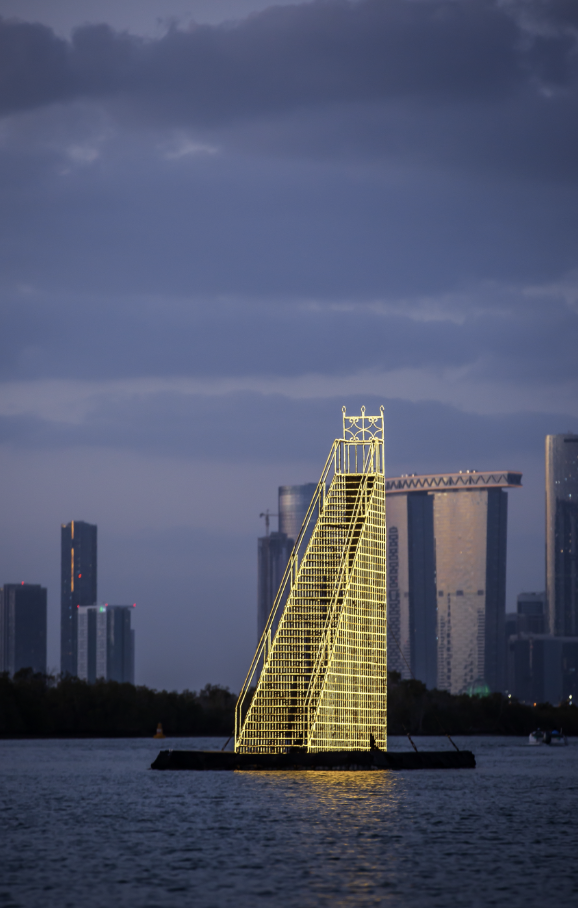

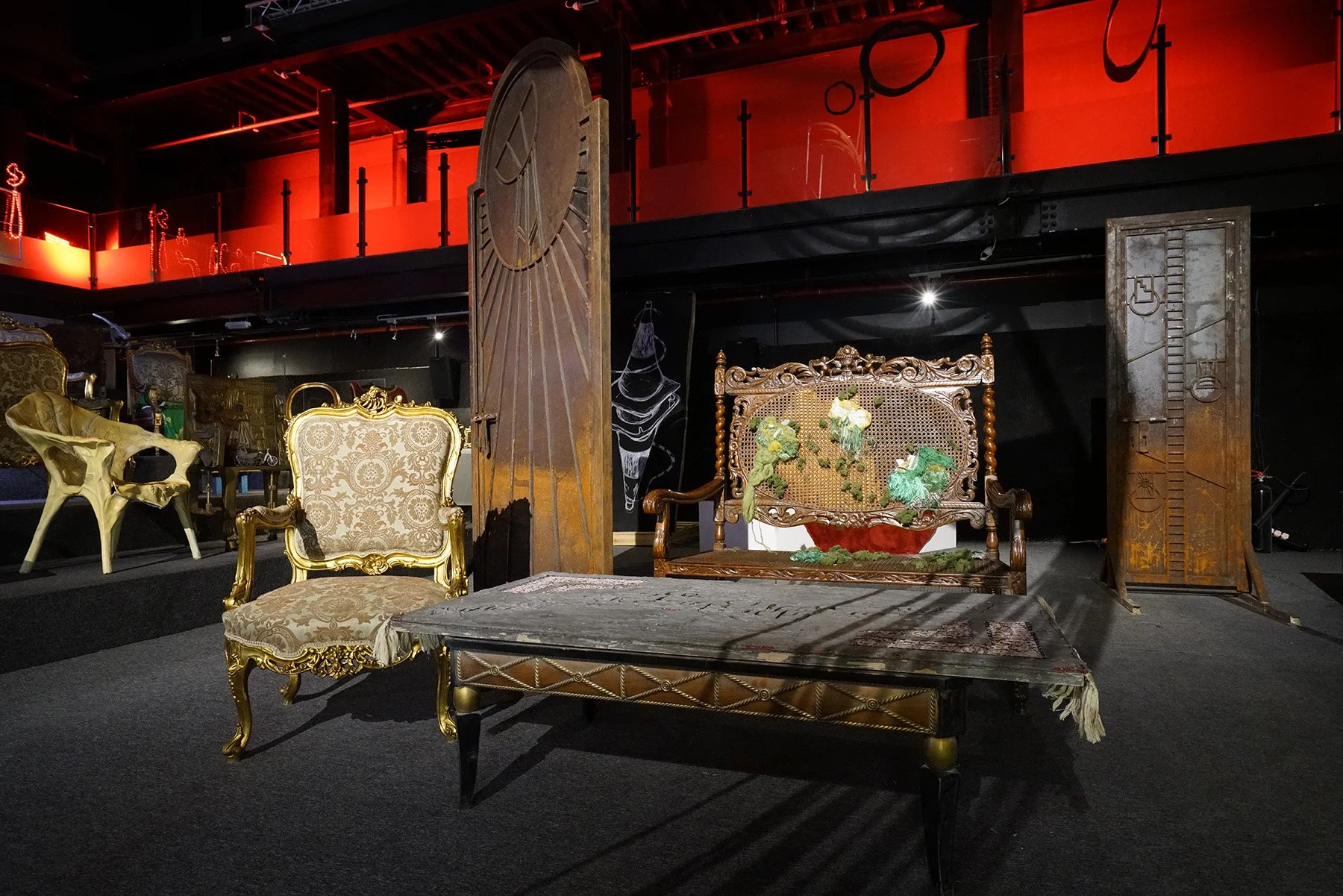
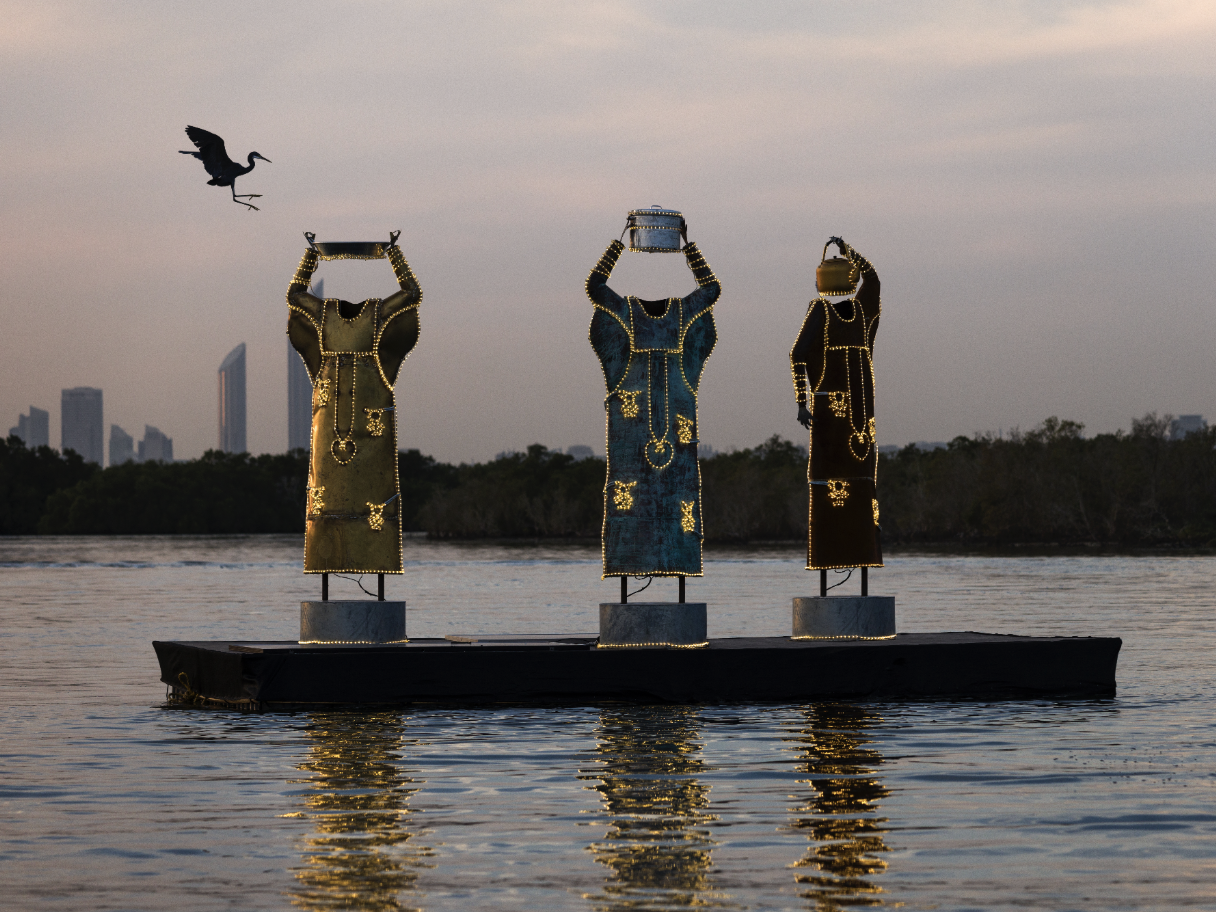

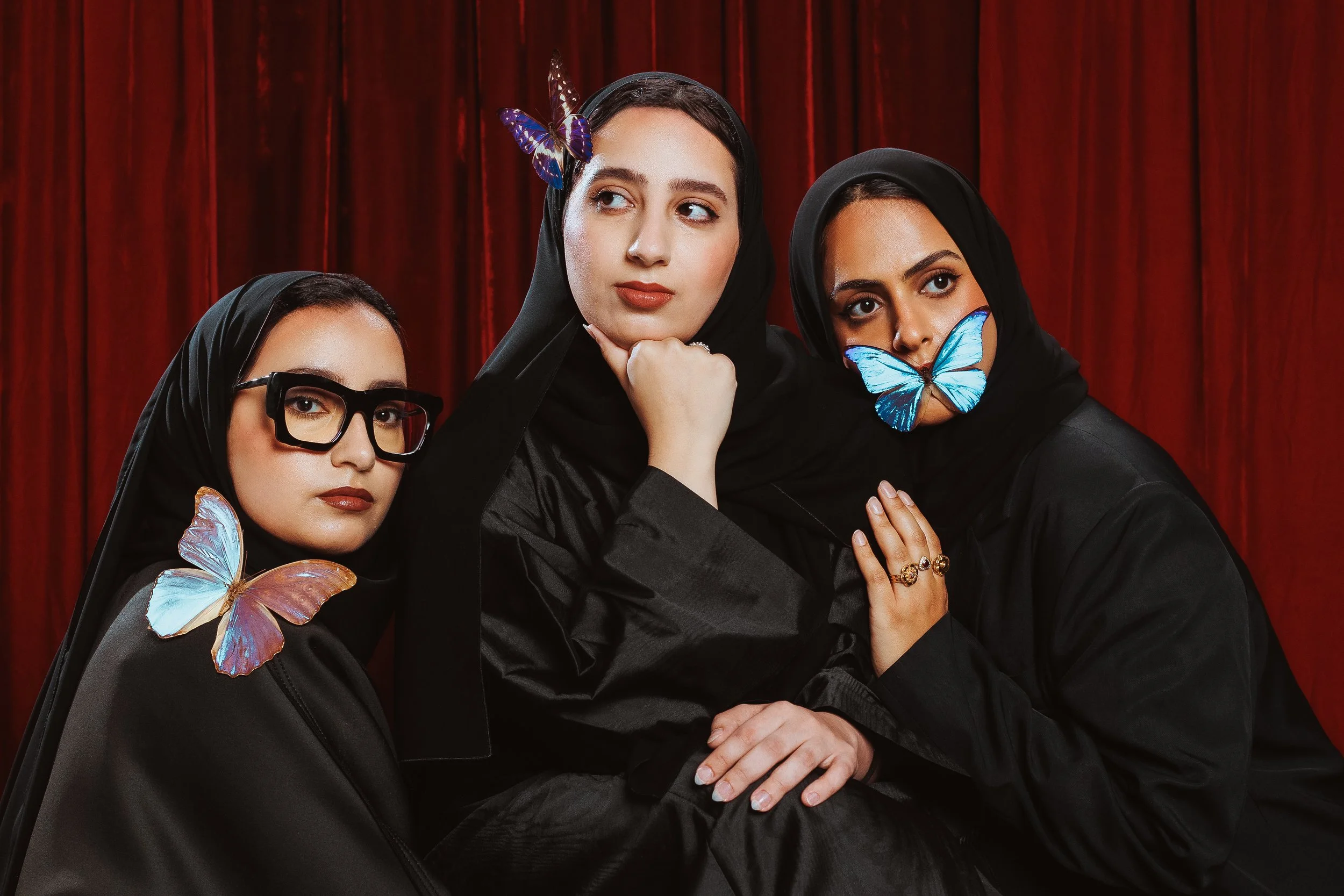
The Farasha Collective brings together three Emirati artists—Ayesha Hadhir, Rawdha Al Ketbi, and Shaikha Al Ketbi—whose practices converge around the afterlives of objects, the choreography of memory, and the porous boundaries between the visible and the invisible. Moving fluidly between the sea, the desert, and the civic institutions of the UAE, the collective approaches the nation not as a fixed narrative, but as a living ecology of rituals, transmissions, and reappearances.
Each member arrives with a distinct lexicon:
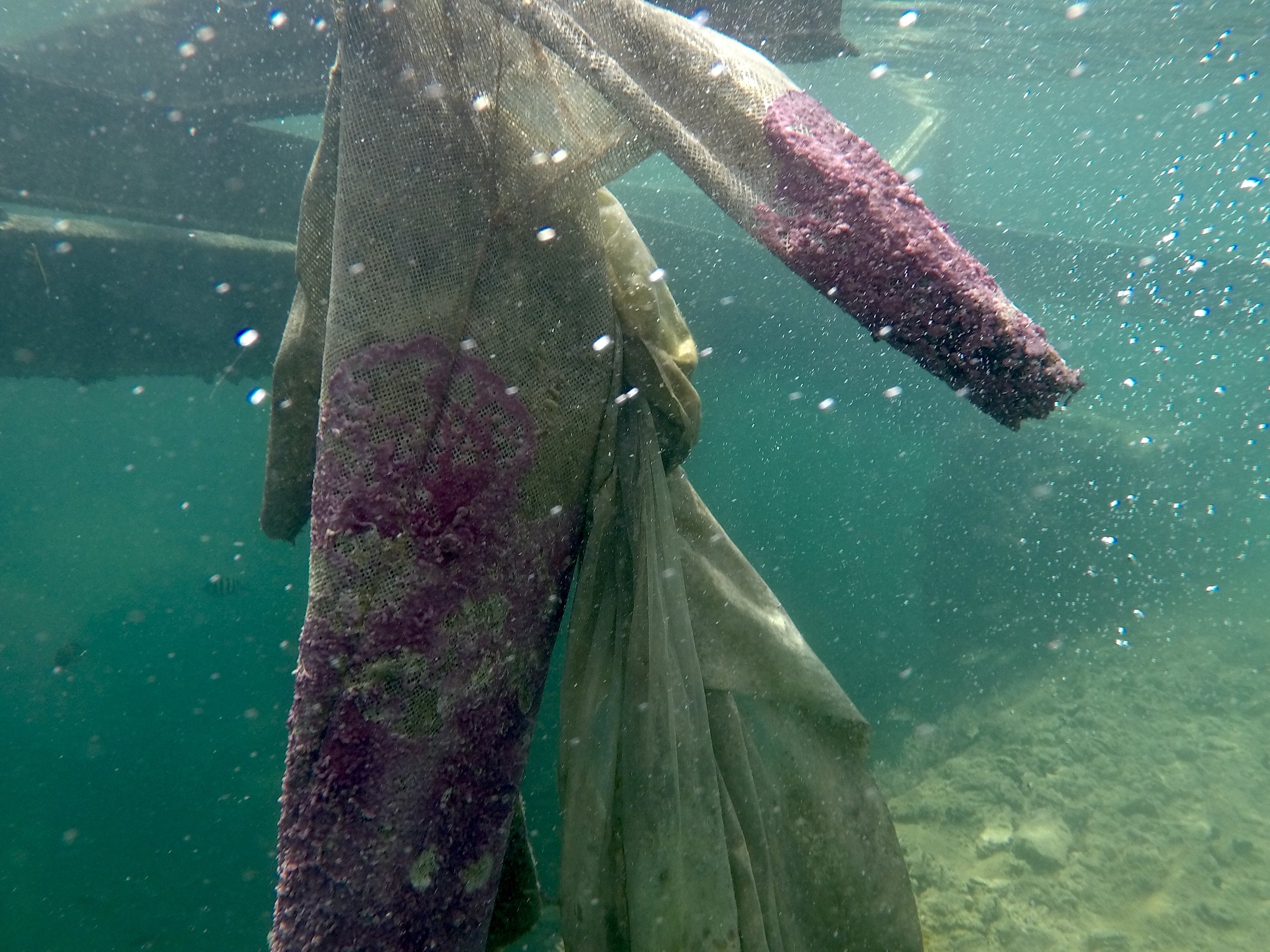
Ayesha descends into the sea to transform objects through tabarruk—a material blessing born of salt, coral, and time. When these objects resurface, they carry a skin of the unseen, as if the ocean had embroidered memory into matter.
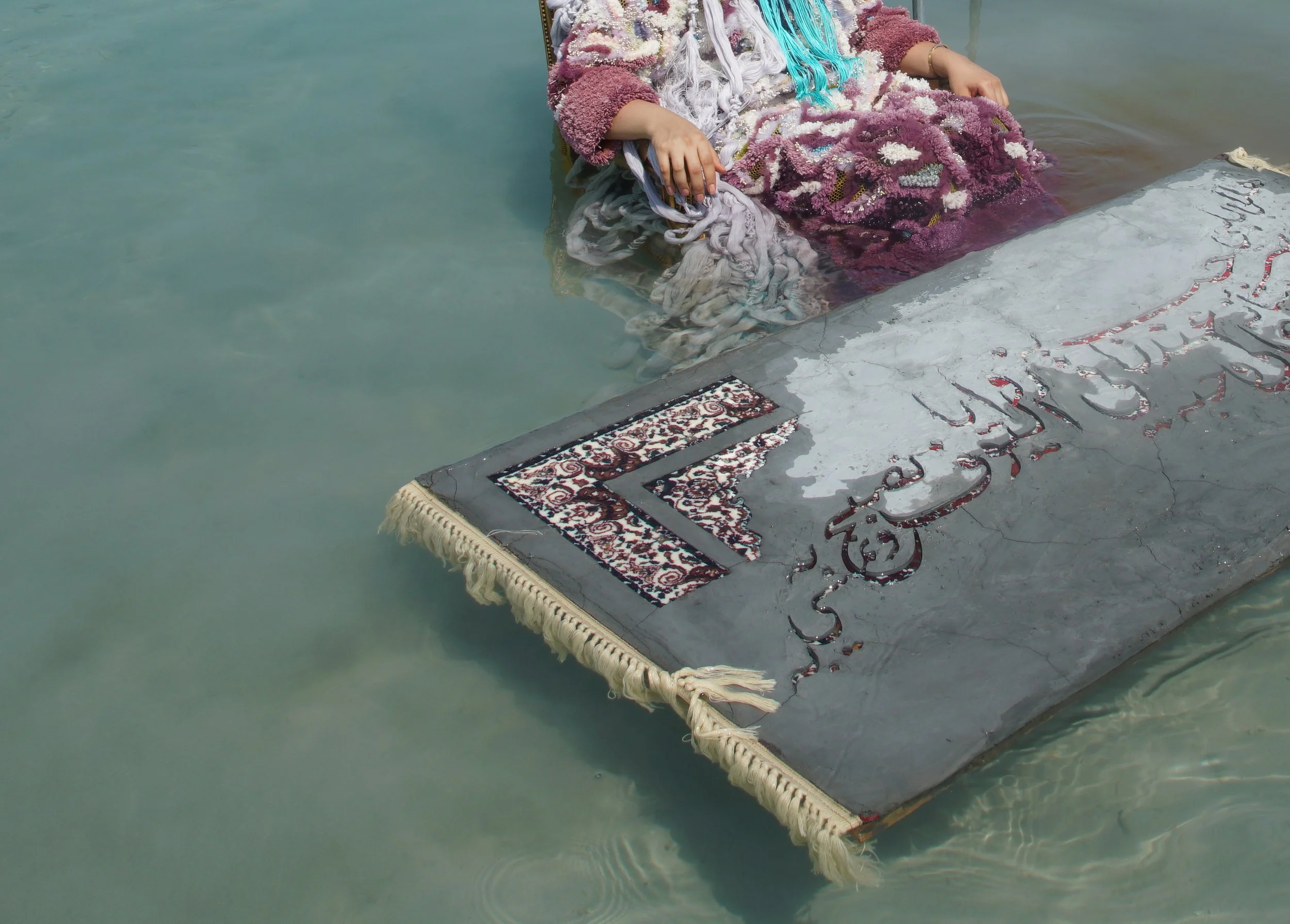
Rawdha stands at the threshold where language becomes weave. Letters crack open into hollows; carpets solidify into concrete; textiles suspend between ritual and architecture. Her works perform a slow negotiation between solidity and softness, body and archive.
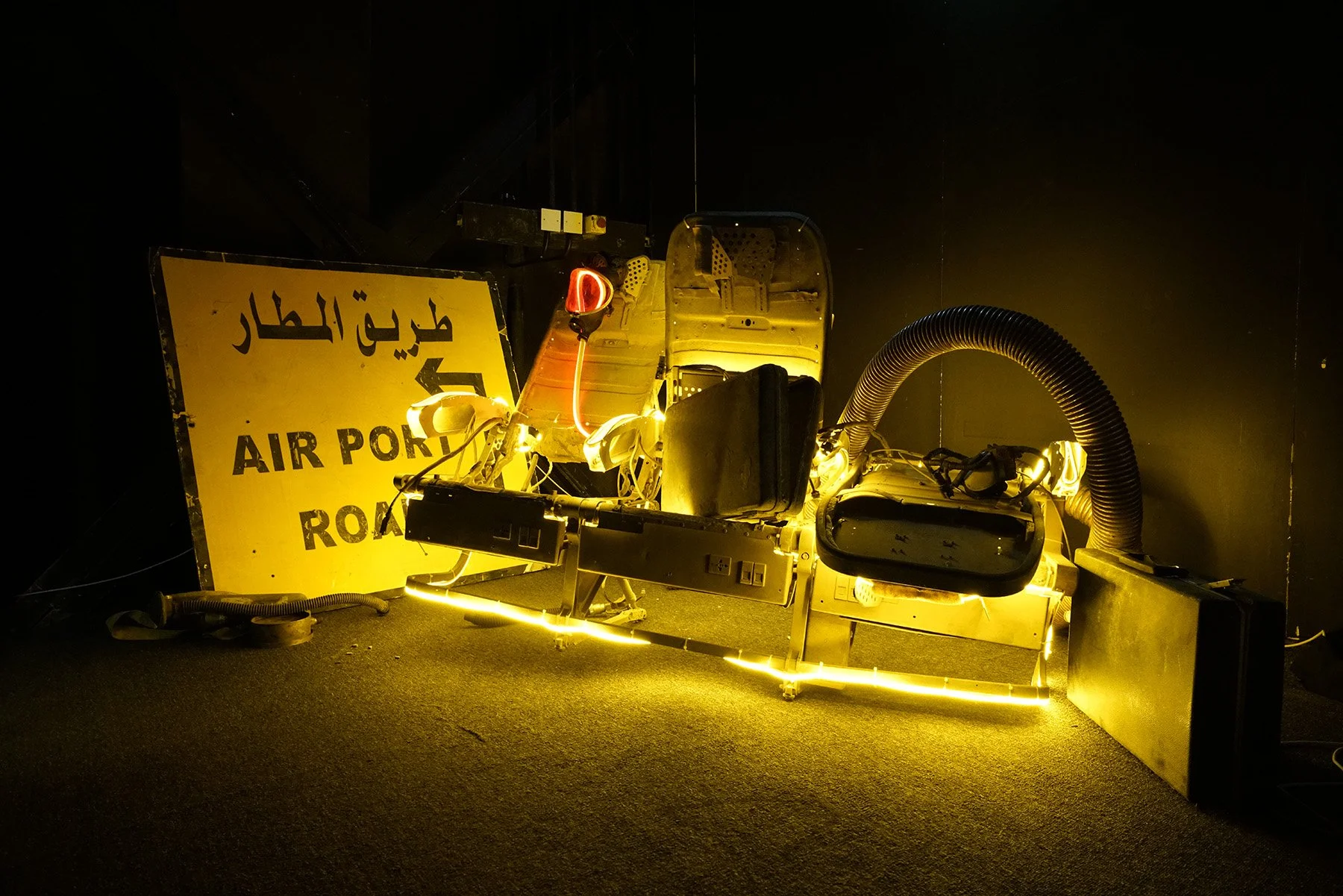
Shaikha inhabits the minimalism of the desert, a landscape of remnants, post-migration rites, and metaphysical time. Rusted bathtubs, satellite dishes, and playgrounds become monoliths—triggers for perception and vessels for ancestral knowledge.
What unites them is not medium, but method: each works through encounter, where the ordinary is estranged until it reveals a speculative past or an unrealized future. The collective’s installations operate like wombs, thresholds, or portals, where objects, textiles, and language shed their utilitarian skins to become carriers of memory, ceremony, and possibility.
Across projects—from the archival desert interventions of Ayyn and the civic choreography of Neither Visible Nor Concealed, to the revolving cosmologies of Dawaran—Farasha’s works reweave domestic materials into mythic infrastructures. Carpets fly without flying; garments remember other countries; relics return from the sea with new skins; the desert becomes a studio of metaphysical physics.
At stake is a larger inquiry into how a young nation remembers, dreams, and narrates itself. Drawing from Bedouin lineages, familial ritual, feminine labor, and the lived infrastructures of the UAE, the collective activates a reservoir of civic knowledge that exceeds the studio and touches the ceremonial, the diplomatic, and the institutional realms.
In this way, Farasha operates not as a singular voice but as a triad of echoing temporalities—sea, textile, and desert—each bending time toward a shared pursuit: to reveal where memory becomes matter, where the invisible gains a skin, and where the remnants of life become generative again.